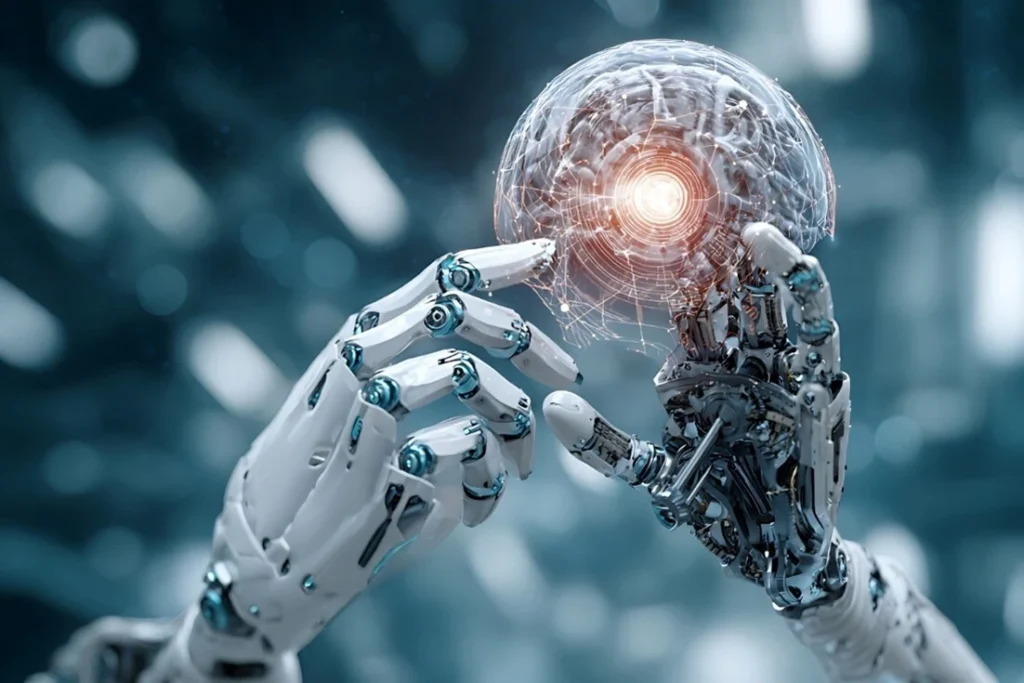
Artificial Intelligence (AI) is reshaping global power by transforming how countries struggle, cooperate, and exert influence. Traditionally, national power was measured by military strength or economic size. Today, AI enhances military intelligence, improves surveillance, and enables faster, more accurate decisions in both diplomacy and conflict. Countries without access to AI technology risk falling behind, deepening the global digital divide. International organizations are actively negotiating ethical rules to prevent the misuse of AI, including its use in propaganda or autonomous weapons.
The Rise of Artificial Intelligence in Global Politics
AI has emerged as one of the most transformative forces in the modern world. It is reshaping industries, economies, and international relations. Nations now understand that AI is not just a technological tool but a source of power, influence, and control. Governments are investing heavily in AI to gain competitive advantages in defense, economic growth, and governance. By analysing vast amounts of data and forecasting global trends, AI enables faster and more informed decision-making. The countries leading in AI development are positioning themselves as the global powers of the future.
AI as a Tool of Economic and Military Power
AI is becoming a key driver of economic and military strength. Economically, it fuels automation, efficiency, and innovation in sectors like healthcare, finance, transportation, and agriculture. Countries that invest in AI-powered industries experience faster growth and higher income levels. Militarily, AI enhances capabilities through autonomous weapons, drones, and advanced surveillance systems, allowing rapid, data-driven decisions during conflict. AI improves national defense by processing enormous amounts of information, predicting threats, and reducing human error. In short, AI strengthens both the economy and security of nations.
Technological Competition Between Major Powers
The global AI race is dominated by the United States and China. The U.S. relies heavily on innovation from private tech giants like Google, Microsoft, and OpenAI, while China integrates government policy with AI development to achieve long-term strategic goals. China’s Next Generation AI Plan aims to make the country the global leader in AI by 2030. This competition goes beyond technology; it is about political influence and control over global data systems. Both nations are advancing AI in military, surveillance, and economic applications. The outcome of this race will shape the future global order, defining trade dominance, defense capabilities, and international governance.
AI’s Impact on Global Governance and Diplomacy
AI is transforming diplomacy, policymaking, and international collaboration. It can predict conflicts, assess global risks such as pandemics or climate change, and generate effective solutions. International organizations like the United Nations and the World Bank can leverage AI to make faster, more informed decisions. AI is also being used in foreign policy, public opinion analysis, and strategic planning, allowing nations to craft better-informed diplomatic strategies. As AI advances, global governance frameworks must adapt to address ethical and policy challenges, making AI central to modern diplomacy and international cooperation.
New Dimensions of Conflict: AI and Cybersecurity
AI has revolutionized cybersecurity and international conflict. Modern warfare increasingly relies not just on traditional weapons but also on codes, algorithms, and cyberattacks. AI plays a dual role: it strengthens defense by detecting threats faster than humans and protecting critical systems, yet it also enables sophisticated cyberattacks, disinformation campaigns, and data breaches. This duality makes AI both a defensive and offensive tool. To safeguard military, financial, and national infrastructure, countries are investing heavily in AI-powered cybersecurity programs.