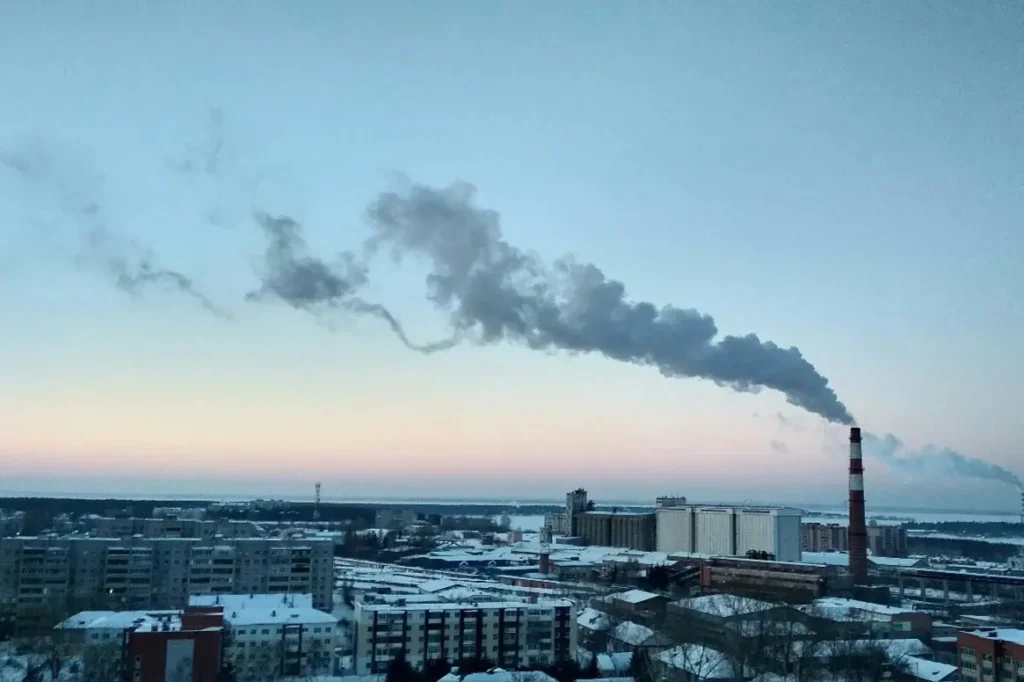
Air pollution has become one of the most serious environmental and health challenges facing Pakistan today. Among the most populous countries in the world, Pakistan unfortunately ranks third in terms of severe air pollution, following Chad and Bangladesh. The pollution levels in Pakistan exceed the guidelines set by the World Health Organization (WHO) by 7.8 times. As a result, the average life expectancy of Pakistani citizens is reduced by about three years. The situation becomes even worse in the major cities of Punjab. In cities such as Lahore, Kasur, and Sheikhupura, studies show that air pollution can reduce life expectancy by up to seven years.
Air pollution has now emerged as the leading threat to public health in the country. It has surpassed many other environmental and health risks that previously ranked higher. Between 1998 and 2025, the average annual particulate pollution in Pakistan increased by approximately 56%, highlighting the alarming growth of the problem over time. The issue of smog gained widespread public attention in Pakistan around 2016, when citizens started experiencing severe eye irritation and breathing difficulties due to the presence of tiny particles in the air. At that time, there was no dedicated law or strong enforcement mechanism to deal with the growing smog crisis. Recognizing the severity of the situation, the government introduced an official smog policy in 2017. In the short term, authorities temporarily closed schools, colleges, and restaurants to reduce exposure to polluted air. For long-term solutions, the government collaborated with the Food and Agriculture Organization of the United Nations (FAO) to conduct a comprehensive study to identify the major causes of smog in the region.
The findings of the study revealed that traffic emissions contribute approximately 43% of smog pollution, while industrial activities account for 25%. Power plants contribute around 20%, and agricultural residue burning contributes about 10%. These figures highlight that the smog problem is the result of multiple interconnected factors rather than an only source.
A closer look at the air quality trends in Lahore shows that certain areas experience much higher pollution levels than others. Regions such as Shahdra, the UET area, and Kahna Nau frequently record some of the worst air quality levels in the city. According to Ali (2025), these areas suffer from higher industrial activity, dense traffic flow, and a lack of green spaces. Research conducted by Anwar et al. (2023) further indicates that Gulberg Town has around 35% green cover, whereas Shahdra Town has only about 1% greenery. The study also reports that Shahdra carries one of the highest traffic burdens in Lahore, with 320,000 vehicles passing through the area every day. This combination of heavy traffic, limited vegetation, and industrial emissions significantly contributes to deteriorating air quality.
Why Does Smog Form?
One of the major geographical reasons behind the recurring smog in South Asia is the Indo-Gangetic Plain (IGP). This vast and fertile alluvial plain covers approximately 700,000 square kilometers and stretches across several South Asian countries, including Pakistan, India, Nepal, and Bangladesh. The region begins near the Himalayas and extends toward the Arabian Sea. Despite being one of the most fertile agricultural regions in the world, it is also one of the most densely populated.
During the winter season, particularly after the monsoon rains, the atmospheric conditions in this region create an environment favourable for smog formation. As temperatures begin to drop in October, a layer of stagnant air forms near the surface due to temperature inversion. This phenomenon prevents pollutants from dispersing into the upper atmosphere. At the same time, moisture in the air forms fog, which mixes with pollutants and particulate matter. As a result, these particles become trapped close to the ground, forming the thick, hazardous smog that often blankets cities across the region.
Another major contributor to air pollution in Pakistan is fugitive dust. Fugitive dust refers to dust particles that escape from non-point sources such as unpaved roads, construction sites, and open land areas. These particles are extremely small and often invisible to the naked eye, yet they can cause severe respiratory problems and chronic health conditions when inhaled over extended periods. To control such dust particles, authorities have introduced anti-smog guns in some areas. These machines spray fine mist into the air, causing dust particles to stick together and settle on the ground. Currently, around fifteen anti-smog guns are operating in Lahore. These machines use clean water to function effectively; otherwise, their nozzles can become blocked. However, the Lahore High Court has expressed concerns about the limited effectiveness of such measures. Justice Shahid Karim has emphasized that uncontrolled construction activities are a major source of smog and that anti-smog guns alone cannot solve the problem. The court has also recommended increasing urban greenery through Miyawaki forests and strengthening environmental monitoring and vehicle emission controls.
The Environmental Protection Agency (EPA) has recently launched an online monitoring system to track air quality levels in Lahore. At present, thirteen monitoring systems have been installed across the city, providing updated Air Quality Index (AQI) data every eight hours. This step aims to improve transparency and allow citizens to stay informed about the quality of the air they breathe.
However, regulatory measures have also created tensions between industrial groups and environmental authorities. Many industrialists have expressed frustration with the Environmental Protection Agency due to stricter emission regulations, governance challenges, and a lack of technical support for cleaner technologies. Despite these concerns, the EPA maintains that protecting public health must remain the top priority.
Possible Solutions
Air pollution and smog are not problems limited to one city or even one country. They are regional and global challenges that require coordinated efforts from governments, industries, and citizens alike. For Pakistan, addressing air pollution requires stronger environmental policies, improved monitoring systems, and effective implementation of regulations.
Since 43% of smog originates from vehicle emissions, promoting public transportation can significantly reduce pollution levels. Citizens should be encouraged to use buses, trains, and shared transport systems whenever possible. Carpooling and avoiding unnecessary travel can also contribute to lowering emissions.
At the community level, introducing integrated waste management systems can help reduce pollutants released from open waste burning. Expanding urban greenery is equally important. Planting more trees, protecting green belts, and increasing the number of urban parks can improve air quality while making cities healthier and more liveable. Schools and colleges can also contribute by expanding play areas and green spaces, which not only improve environmental conditions but also promote healthier lifestyles.
If meaningful steps are taken today, Pakistan can still reverse the damage and protect the health and well-being of future generations. Clean air is not a luxury; it is a necessity for life.