Human beings are social by nature. We are wired to build relationships, seek companionship, and share our thoughts and emotions with others. Meaningful conversations and emotional connections are not merely social preferences; they are fundamental human needs. Yet, despite living in the most digitally connected era in history, loneliness has become an increasingly common experience.
Modern life has brought immense convenience, but it has also introduced new psychological and social challenges. Busy lifestyles, geographical separation, demanding careers, social anxiety, broken relationships, and the growing preference for virtual interactions have all contributed to a rise in loneliness. As genuine human connections become more difficult to maintain, an unexpected companion has emerged - Artificial Intelligence.
AI was originally designed to improve productivity, simplify tasks, and enhance decision-making. However, its role has expanded far beyond education, business, and workplace efficiency. Today, many people turn to conversational AI platforms such as ChatGPT and other chatbots not simply to seek information, but to seek comfort, understanding, and companionship.
This shift is both fascinating and thought-provoking.
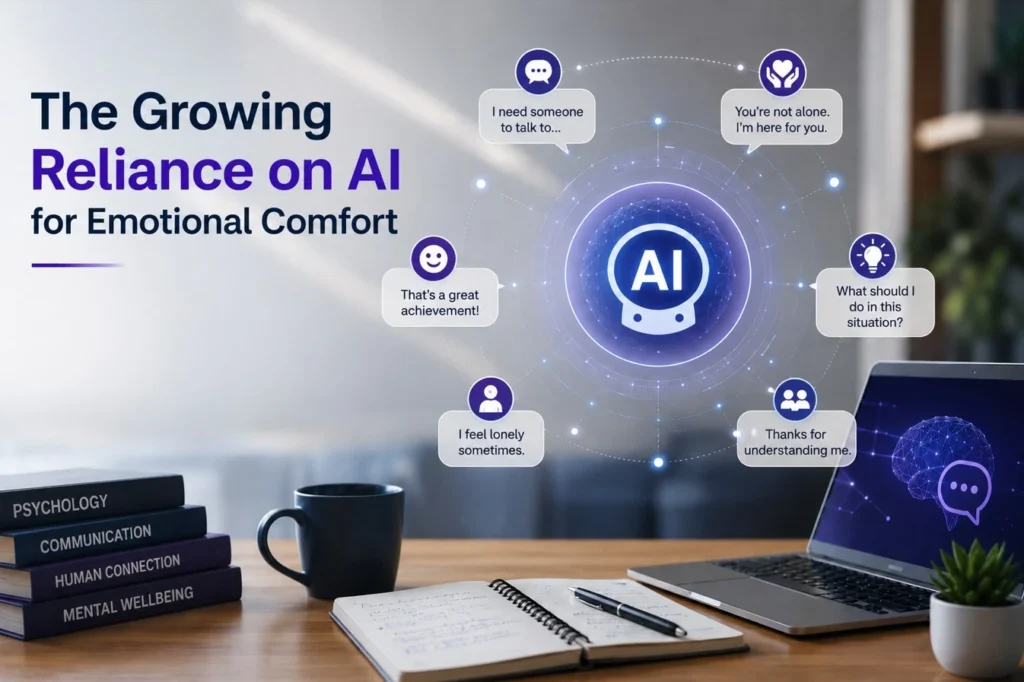
People who live alone, struggle with loneliness, or have limited social relationships often find themselves talking to AI for emotional support. They share their worries, discuss personal problems, express fears, and even celebrate achievements with a chatbot. For many, AI has become a patient listener that is available at any hour of the day without interruption, criticism, or judgement.
In many ways, this development has positive aspects. AI offers a safe and non-judgemental space where individuals can express emotions freely. Unlike human conversations, there is little fear of embarrassment, rejection, or having personal secrets disclosed. For someone experiencing isolation, simply being able to communicate openly can provide temporary emotional relief.
People increasingly seek AI's guidance in matters that were once reserved for close friends and family. Individuals experiencing heartbreak ask AI for emotional reassurance. Those preparing for marriage consult AI about relationships and compatibility. Others seek advice on resolving conflicts, improving communication, or making important life decisions. The conversation has evolved far beyond asking AI to write emails or solve mathematical problems; it has entered deeply personal aspects of human life.
Yet this growing reliance also raises an important question.
If people are finding emotional comfort in AI, what does it reveal about our society?
Perhaps the real story is not that AI has become more human, but that human relationships have become more fragile. Technology is beginning to fill spaces that were traditionally occupied by friends, family members, mentors, and communities. While AI can simulate empathy through carefully generated language, it does not experience emotions, care, or human affection. It responds intelligently, but it does not feel.
This does not mean AI companionship is inherently harmful. For many individuals, it may reduce feelings of loneliness, encourage reflection, or even motivate them to seek professional help when needed. However, emotional reliance on AI should complement, not replace, meaningful human relationships.
The growing reliance on AI for emotional comfort is ultimately less a story about technological advancement and more a reflection of contemporary society. It reveals our increasing need to be heard, understood, and emotionally supported in a world where genuine human connection often feels scarce.
Perhaps the most important question is not whether AI can become our companion, but why so many people are searching for companionship in AI in the first place.